Building a new habit is notoriously difficult. Groundbreaking clinical research on habit formation published by Dr. Phillippa Lally at University College London demonstrates that it takes a median of 66 days for a new behavior to achieve full automaticity, with individual timelines spanning anywhere from 18 to 254 days. During this critical ramp-up period, maintaining new behaviors demands deliberate conscious effort—and cognitive energy is an intrinsically exhaustible biological resource. Consequently, countless personal growth goals collapse before reaching true automaticity, not from a deficit of discipline, but because cognitive overload makes solo habit initiation unsustainable.
🧠 Quick Self-Check: Discover Your Habit Stacking Potential
Before reading this comprehensive guide, test your knowledge on behavioral architecture and see if habit stacking is the missing link in your daily routine.
Habit stacking offers an elegant and clinically validated counter-strategy to willpower depletion. Rather than relying on motivation to kickstart a fragile routine, habit stacking attaches the targeted ritual to an anchor habit that is already rock-solid in your neurological framework. The existing anchor habit serves as an automatic cue, instantly triggering the subsequent action without deliberative resistance. The universal architecture is simple: "After [current habit], I will [new habit]." In this manner, your daily routine acts as natural scaffolding for meaningful behavior change.
📑 Table of Contents
- 1. The Cognitive Science Behind Habit Stacking & Automaticity
- 2. Why Morning Routines and Night Routines Provide Ideal Anchors
- 3. 8 Practical Habit Stacking Examples for Morning Routines
- 4. 7 High-Impact Evening Routine Ideas & Night Stacks
- 5. Architecture Comparison: Isolated Habits vs. Habit Stacking
- 6. How AI Can Help You Master Habit Stacking & Behavior Change
- 7. Core Principles for Lasting Habit Formation
- 8. Frequently Asked Questions (FAQ)
- 9. Article Summary & Community Discussion
The Cognitive Science Behind Habit Stacking & Automaticity
The neurobiological power of habit stacking rests on synaptic efficiency. Brain imaging reveals that repeatedly executed routines—such as brewing coffee or turning off an alarm—form dense basal ganglia neural pathways. By chaining an emerging practice onto an already established synaptic circuit, the nascent ritual hitchhikes on ingrained motor and cognitive sequences. Instead of having to initiate a decision from scratch, your mind experiences minimal friction.
According to research highlighted by the National Institutes of Health (NIH), repetitive cue-routine-reward pairings solidify synaptic connectivity, ultimately driving true automaticity. When you use an existing anchor habit, the cognitive load is reduced exponentially. This makes building new behaviors predictable, low-stress, and remarkably resilient against life disruptions.

🌟 Real-Life Inspirations & Success Stories
Consider the disciplined daily routine of Benjamin Franklin, who meticulously charted his day around fixed anchors—waking, self-examination, and specific blocks of industry. In modern times, celebrated authors like Haruki Murakami anchor hours of deep creative output immediately to waking before dawn and brewing tea, transforming complex mental challenges into frictionless sequences that yield exceptional creative consistency.
Why Morning Routines and Night Routines Are Ideal for Habit Stacking
Not all segments of the 24-hour cycle offer equal environmental consistency. Our midday hours are frequently subject to unforeseen interruptions, reactive communication, and fluctuating demands. In contrast, morning routines and night routines possess an extraordinary structural stability. Most people naturally execute fixed motor patterns immediately upon waking and right before drifting to sleep.
A classic morning routine is anchored by rising, personal hygiene, and morning hydration. Meanwhile, a structured evening sequence is framed by stepping away from work, dimming ambient lighting, and preparing for restorative sleep. These boundaries represent prime behavioral territory where tiny morning habits and evening routine ideas can flourish into effortless habits without triggering cognitive fatigue.
Watch the Video Breakdown
For deeper practical demonstrations on behavioral chaining and designing high-performing daily routines, check out this comprehensive video tutorial.Morning Stacks: 8 Habit Stacking Examples
Morning represents a distinct behavioral window, shielded from the accumulating sensory overhead of incoming messages. Implementing actionable habit stacking examples during your first conscious hour sets a proactive tone for the entire day.

- Stack 1: Rehydration Activation: After I turn off my morning alarm, I will immediately drink a full 16-ounce glass of filtered water placed on my nightstand. This instantly replenishes vital cellular hydration lost during sleep and prompts systemic wakefulness.
- Stack 2: Micro-Movement While Brewing: After I push the button on my morning coffee machine or tea kettle, I will complete 10 bodyweight squats or 60 seconds of gentle spinal stretching. This utilizes idle brewing minutes to stimulate cardiovascular circulation and joint mobility.
- Stack 3: Positive Mindset Mirror Cue: After I brush my teeth in the morning, I will look in the bathroom mirror and recite one focused intention or positive statement of gratitude for the day ahead. This aligns executive focus before sensory overload sets in.
- Stack 4: High-Impact Prioritization: After I set down my morning coffee mug, I will open my notebook and write down my top three non-negotiable priorities for the day. This proactive ritual prevents your workday from devolving into reactive inbox management.
- Stack 5: Diaphragmatic Shower Reset: After I turn off the shower faucet, I will pause for five measured, deep diaphragmatic breaths before reaching for my towel. This activates parasympathetic nervous stability, steadying your physiological baseline.
- Stack 6: Circadian Sunlight Calibration: After I put on my daytime clothes, I will step outside onto the balcony or patio for 2 to 5 minutes of direct sunlight. Natural outdoor photon exposure suppresses melatonin and resets your internal circadian pacemaker.
- Stack 7: Single-Page Intellectual Growth: After I pour my morning herbal tea, I will read exactly one page of an educational non-fiction book placed beside the mug. Reading a single page eliminates performance anxiety and steadily aggregates vast knowledge over time.
- Stack 8: Desk Transition Mindfulness: After I sit down in my office chair, I will take three deep breaths with my eyes closed before opening any email or messaging software. This establishes a deliberate boundary between personal time and workplace focus.
Night Stacks: 7 High-Impact Evening Routine Ideas & Night Stacks
Unlike morning sequences designed to foster alertness, night routines must methodically down-regulate autonomic arousal. Using smart evening routine ideas prepares your physiological systems for deep sleep and psychological decompression.
- Stack 9: Post-Dinner Metabolic Stride: After I wash my dinner plate, I will take a relaxing 10-minute walk around the neighborhood. Light postprandial movement dampens blood glucose spikes and smoothly bridges active hours toward rest.
- Stack 10: Screen Separation Boundary: After I finish brushing my teeth at night, I will place my smartphone on its charging station outside my bedroom. Physically relocating digital hardware eliminates blue light exposure and middle-of-the-night screen temptation.
- Stack 11: Reflection via Pajama Cue: After I put on my pajamas, I will jot down one meaningful victory or event from today in my evening log. Shifting attention to constructive reflections soothes cognitive rumination.
- Stack 12: Bedtime Somatic Body Scan: After I turn off the bedroom lamps, I will conduct a 60-second progressive body scan, consciously releasing tension from my jaw, shoulders, and spine. This muscular release assists sleep onset.
- Stack 13: Next-Day Mental Closure: After I climb into bed, I will mentally confirm my primary intention for tomorrow morning. Providing closure to open cognitive loops prevents insomnia-inducing midnight worry.
- Stack 14: Analog Reading Wind-Down: After I verify that my wake-up alarm is set, I will read one page of a physical, non-backlit paper book. This low-stimulation ritual enables natural melatonin synthesis to improve sleep quality.
- Stack 15: Pre-Sleep Gratitude Anchor: After I rest my head on the pillow and shut my eyes, I will visualize one moment of sincere gratitude from the day. Ending your conscious waking state with positive neurological priming promotes restorative rest.

🎬 Visual Summary Slides
Swipe/scroll horizontally to view the key visual takeaways and lessons from this guide:


Architecture Comparison: Isolated Habits vs. Habit Stacking
Understanding why conventional habit change often falters requires comparing isolated resolutions against systematized behavioral chaining:
| Behavior Dimension | Isolated Habit Initiation | Systematic Habit Stacking |
|---|---|---|
| Behavioral Trigger | Relies on arbitrary time or internal willpower | Anchored to an already automatic, established action |
| Cognitive Load | High; requires conscious daily deliberation | Extremely low; piggybacks on existing neural pathways |
| Consistency Over 60 Days | Frequent drop-offs when life stress peaks | Remarkably stable due to embedded contextual cues |
| Adaptability & Scaling | Difficult to modify without rebuilding motivation | Modular; new behaviors can be layered as automaticity grows |
📚 Recommended Readings & Lit List
To dive deeper into behavioral mechanics and the scientific foundations of daily routines, explore these authoritative resources:
- "Atomic Habits" by James Clear: The premier practical guide illustrating how small cue-based changes compound into remarkable long-term behavior transformation.
- "Tiny Habits" by Dr. BJ Fogg: A foundational work by the founder of the Stanford Behavior Design Lab detailing the mechanics of tiny anchor-prompt actions.
- "The Power of Habit" by Charles Duhigg: An insightful neurological examination of the basal ganglia, the cue-routine-reward loop, and social habit systems.
How AI Can Help You Master Habit Stacking & Behavior Change
Modern generative AI systems (such as ChatGPT, Claude, and Gemini) can serve as personal behavioral architects. Instead of struggling to pinpoint which anchor habits in your daily life are sturdy enough to support new behaviors, you can feed an AI your natural daily patterns and have it generate a tailored habit stack.
Here is an actionable step-by-step workflow: first, record your exact, unedited morning and night actions for two consecutive days. Second, paste that list into an advanced AI model using the calibrated prompt template below. The AI analyzes your natural transition points, selects low-friction pairings, and outputs an individualized sequence engineered for sustained automaticity.
Act as a behavioral psychologist and habit design specialist. Below is my current unedited daily routine:

[Insert your typical morning and night routines here]

My primary self-improvement goals for this quarter are:
1. [Goal 1, e.g., Read more non-fiction]
2. [Goal 2, e.g., Improve mindfulness/lower morning stress]

Please design a customized Habit Stacking Plan using the exact formula: 'After [Current Anchor Habit], I will [Micro-Habit under 2 minutes].'
- Identify 2 rock-solid anchor habits in my morning and 2 in my evening.
- Ensure each stacked behavior takes under 120 seconds to minimize cognitive friction.
- Provide a simple friction-reduction strategy for each stack to guarantee 66-day automaticity.
Core Principles for Lasting Habit Formation
While exploring curated habit stacking examples is a great starting point, mastering the universal principles behind them ensures you can architect reliable routines across all life transitions:
- Laser Precision Over Ambiguity: Your anchor formula must be unambiguous. Saying "After I wake up, I will be more productive" invites paralysis. In contrast, "After my feet touch the floor, I will drink 8 ounces of water" is a clear, actionable motor script.
- Start Infinitesimally Small: The early phase of The act of tracking and conditioning requires minimal friction. A new behavior requiring under two minutes preserves willpower, allowing the basal ganglia circuit to consolidate before volume or intensity increases.
- Choose Unshakable Anchor Habits: An anchor must occur at the exact same point every single day without exception. Brushing teeth, brewing coffee, and getting into bed are resilient anchors; vague moments like "after I wrap up work" are too volatile.
- Adopt One Stack at a Time: Behavioral studies demonstrate that attempting multiple lifestyle overhauls simultaneously dilutes focus and causes goal collapse. Anchor one stack, run it for three to four weeks until it feels natural, and only then attach the next link.
- Cultivate Self-Compassion After Lapses: Missing a day does not reset your neural progress. Epidemiological studies from the European Journal of Social Psychology indicate that an occasional missed day has no measurable effect on the eventual attainment of automaticity. Simply re-engage your anchor the following day.
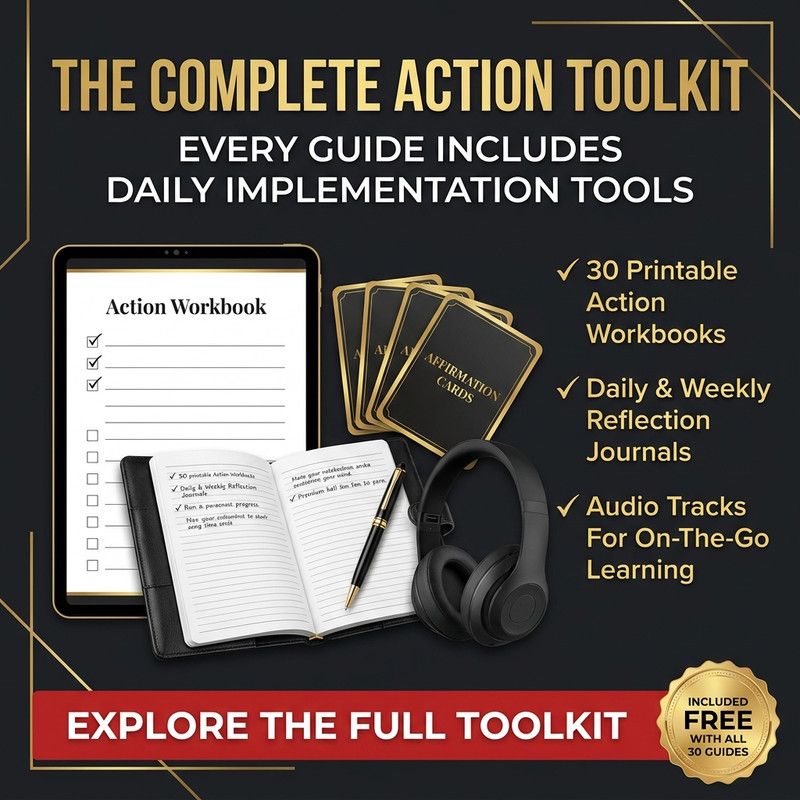
🚀 Unlock the Interactive Habit Mastery Bundle
Deepen your understanding and build lasting routines by downloading our premium Habit Transformation Bundle, tailored to turn theory into daily automaticity. This interactive toolkit includes:
- Interactive HTML Dashboard: An intuitive digital habit stack builder to map and track your custom morning and night sequences effortlessly.
- Deep-Dive Audio Podcast: High-resolution audio guidance you can listen to on your daily commute to stay inspired and accountable.
- Visual Carousel Summary: Clean, high-impact infographics distilling core behavioral frameworks for rapid reference.
Frequently Asked Questions (FAQ)
- What is habit stacking in simple terms? Habit stacking is a behavioral design tactic where you pair a new micro-action directly with an established, automatic daily routine. It follows the formula: "After [current habit], I will [new habit]."
- How long does it take for a stacked habit to feel natural? Clinical research indicates that developing automaticity takes anywhere from 18 to 254 days, with a median around 66 days. By stacking small behaviors onto reliable anchors, this timeline can feel significantly less taxing.
- What makes a great anchor habit? An ideal anchor habit is an action you already do every single day with near 100% consistency, regardless of your mood or schedule—such as turning off an alarm, brushing your teeth, or pouring a cup of water.
- Can I stack multiple habits together into a long sequence? Yes, once individual pairings achieve automaticity, you can chain multiple micro-habits into a comprehensive routine. However, you should always start with a single two-behavior pairing before adding more steps.
- What should I do if I miss a day in my habit stack? Do not stress. Behavioral science proves that a single missed day does not derail long-term automaticity. Simply reset and execute your routine the following morning or evening without harsh self-criticism.
💬 We'd Love to Hear Your Thoughts!
Which existing daily routine is your most rock-solid anchor? Have you tried linking a new morning or night habit to it yet, and what hurdles did you face? Share your personal habit stacking experiments and insights in the comments section below—let's discuss and learn together!
Summary: Building a Purposeful Life One Stack at a Time
Transformative personal growth rarely emerges from unsustainable surges of willpower. Instead, lasting behavioral change is built through the strategic, repeated execution of small behaviors integrated into daily living. By leveraging habit stacking within your established morning routines and soothing night routines, you eliminate friction and allow the brain's innate capacity for automaticity to do the heavy lifting.
Start with a single stack: drink water after your alarm, take five deep breaths after showering, or step outside for morning light. As the neural link strengthens, layer in additional positive habits. Over time, these small actions compound into remarkable gains in health, clarity, and daily fulfillment.