You know exactly what you need to do. Open the textbook. Start the project. Hit the gym. So why does your brain throw a tantrum every time you try? You reach for your phone. You stare at the wall. You suddenly feel an overwhelming urge to organize your desk drawer by color.
🧠 Quick Check: Are Your Study Habits Biology-Backed?
Before diving into the science, take this quick 3-question test to discover if your current routine works with your brain or against it. Track your score to receive your completion certificate!
1. How do you handle digital distractions while studying?


It’s not laziness. It’s a biological battle between your modern goals and a brain that hasn't evolved much in 200,000 years. We live in an era of "digital overload" and "attention fragmentation," where the old advice of "just make a to-do list" feels laughably obsolete.
This guide will teach you how to build good habits for students by working with your brain's biology, not against it. We’ll move beyond simple to-do lists to create a system for sustainable success in 2026 and beyond.
✨ Stick around until the end — we have a 2-minute quiz to reveal your "Discipline Personality" and a final interactive checklist to track your progress.
📺 Watch the Summary Video
Prefer watching over reading? In this 10-minute guide, you'll learn exactly how to build good habits for students by working with your brain, not against it. These are not generic "just make a to-do list" tips. These are science-backed strategies updated for 2026.
🎯 After watching, take the 2‑minute quiz below to discover your discipline style!
📚 Table of Contents
- 1. Why Does Your "Lizard Brain" Hate Your Study Plan?
- 2. The 3‑Bucket System for Taming Digital Distractions
- 3. How to Use "Quiet Ambition" to Study Smarter
- 4. What is Ego Depletion? (Beat the Afternoon Slump)
- 5. The 5‑Minute Rule: Gamified Approach to Procrastination
- 6. Habit Stacking: Make Good Habits Effortless
- 7. Quick Recap
- 8. Your 7‑Day To‑Do List
- 9. Frequently Asked Questions
- 10. Test Quiz
🧠 Why Does Your "Lizard Brain" Always Win Against Your Study Plan?

Imagine your brain as a simple two-part machine. In one corner, you have the prefrontal cortex—the "wise owl." This is the part that understands long-term goals. It knows that studying tonight means passing the exam next week. It is the seat of your executive functioning, responsible for planning, organizing, and maintaining focus.
In the other corner, you have the amygdala, or as I like to call it, the "lizard brain." This ancient part of your brain only cares about one thing: immediate comfort and survival. It doesn't understand "exams." It sees a difficult textbook as a threat. Threats cause stress. How does the lizard brain solve stress? By seeking pleasure: a dopamine hit from social media, the comfort of food, or the safety of doing nothing. This is the root cause of chronic procrastination.
When you sit down to study, you aren't "lazy." You are literally watching your wise owl and your lizard brain get into a cage match. And the lizard brain fights dirty. It uses your own biology against you. To build sustainable study habits, you must learn to bypass this emotional defense mechanism.
Reframing this battle is the first and most critical step in building good habits for students. It removes the shame and guilt that often accompanies procrastination. You can't tame what you don't understand. You must acknowledge that the resistance you feel is a primal, automatic response.
📱 The 3‑Bucket System: Taming Digital Distractions in 2026

Your lizard brain's favorite weapon is your smartphone. It’s a device specifically engineered by some of the smartest people in the world to capture your attention. To build real digital wellbeing, you can't rely on willpower alone. You need a system that acts as a reliable focus management technique.
Introducing the 3‑Bucket System, a simple yet powerful focus management technique for the modern age.
Imagine three buckets on your phone's home screen:
- Bucket 1: The Toolbox (Essential). These are apps that serve a clear, necessary function and are not a source of endless scrolling. Examples: Phone, Messages, Calendar, Maps, Camera, Banking app.
- Bucket 2: The Workshop (Work/Study). These are the apps you use to create and learn. Examples: Note‑taking app, learning platform, document editor, university portal.
- Bucket 3: The Arcade (Fun/Low‑Quality). This is where the lizard brain lives. These are apps designed for infinite consumption. Examples: Instagram, TikTok, YouTube, Netflix, games.
The Rule:
- Rule 1: Only Bucket 1 lives on your home screen.
- Rule 2: Bucket 2 lives on the second screen (one swipe away).
- Rule 3: Bucket 3 apps are deleted from your phone and accessed only via a web browser or during scheduled "Arcade Hours" on a tablet or laptop.
By creating this friction, you give your prefrontal cortex a fighting chance. In the 3 seconds it takes to find a browser and log in, you might just remember that you were supposed to be studying. This simple environmental design is the cornerstone of modern focus management techniques and is essential for maintaining digital wellbeing.
🌱 How to Use "Quiet Ambition" to Study Smarter (The 2026 Way)
For decades, the narrative around success was "hustle harder," "grind 24/7," and "sleep when you're dead." The result? Mass burnout. In 2026, we are seeing a powerful shift toward something called quiet ambition.
Quiet ambition is the pursuit of meaningful goals without the noise, the burnout, and the performative stress. It’s about running your own race at a sustainable pace. For students, this is a revolutionary way to approach good habits for students.
Instead of saying, "I will study for 8 hours today and get an A" (an outcome‑based goal that invites anxiety and failure), quiet ambition asks you to set process‑based goals:
- Process Goal 1: "I will do two focused 90‑minute study sessions today."
- Process Goal 2: "I will write 300 words of my essay."
- Process Goal 3: "I will fully understand one chapter."
These goals are within your control. They don't depend on the difficulty of the exam or the mood of the professor. Achieving them builds momentum and confidence—two things that are essential for developing strong executive functioning skills.
🔋 What is Ego Depletion? The Science of Running Out of Willpower

Have you ever noticed how easy it is to stick to your diet in the morning, but by 8 PM you're devouring a bag of chips? That’s not a moral failing; that’s ego depletion.
Ego depletion is the scientific theory that self‑control or willpower is a finite resource that gets used up throughout the day. Every decision you make—what to wear, what to eat, which email to answer first—draws from the same pool of energy. By the afternoon, your tank is on empty. Your prefrontal cortex is tired, and the lizard brain takes the wheel. This is why scheduling is a critical executive functioning skill. You must become an architect of your own energy.
How to beat the slump:
- Identify your MITs (Most Important Tasks): Determine the 1‑3 things that will move the needle the most today.
- Schedule your MITs for your "Willpower Peak": For most people, this is in the morning, about 2‑3 hours after waking up.
- Protect that time at all costs: No meetings, no phone, no social media. This is your golden hour.
When you understand the curve of ego depletion, you stop blaming yourself for being "lazy" in the afternoon and start designing your day to work with your biology, not against it. This is a core pillar of sustainable study habits.
📊 Willpower-Based vs. Biology-Backed Study Systems
To understand why traditional methods fail, let's compare the two primary approaches to student productivity:
🎮 The 5‑Minute Rule: A Gamified Approach to Beating Procrastination
So, you know when to work, but what if you just can't start? The gap between intention and action is where dreams go to die. This is where we need to use gamification for learning to bypass the brain's natural resistance.
The lizard brain hates starting because it perceives the task as a massive, energy‑consuming threat. So, we trick it with the 5‑Minute Rule.
The rule is simple: Commit to working on the task for just five minutes. That’s it. After five minutes, you have permission to stop.
What happens? The hardest part of any task is the transition—the act of beginning. Once you’ve overcome that initial friction, momentum takes over. It’s much easier to keep running than it is to start running from a standstill. Five minutes in, the task no longer looks so scary. You’re already doing it. You might as well finish the chapter. This is a top‑tier focus management technique because it lowers the barrier to entry to almost zero.
By applying gamification for learning, you turn a daunting mountain into a small, climbable hill. It’s a game where the only rule is to play for five minutes. And you almost always end up playing for much longer, effectively defeating procrastination.
🔗 Habit Stacking: How to Make Good Habits Effortless

You’ve started. Now, how do you make it stick? How do you transform isolated actions into automatic, good habits for students? The answer is habit stacking.
Habit stacking is a concept popularized by James Clear in his book Atomic Habits. The formula is simple: "After/Before [CURRENT HABIT], I will [NEW HABIT]."
You are linking a new, desired behavior to an existing, automatic one. The existing habit acts as a trigger.
Examples for students:
- Example 1: "After I pour my morning coffee, I will review my flashcards for 10 minutes."
- Example 2: "Before I put my phone on its charger at night, I will lay out my clothes and books for tomorrow."
- Example 3: "After I finish my last class, I will immediately go to the library for a 25‑minute Pomodoro session."
This works because the neural pathways for the existing habit are already strong. You don't have to think about making coffee. By attaching the new habit to it, you borrow that neural strength, making the new behavior much easier to adopt and automate. This is a highly effective way to build long-term study habits.

🌟 Real-Life Inspirations & Success Stories
Consider the daily routine of Benjamin Franklin, one of the most prolific polymaths in history. Franklin famously designed a highly structured daily schedule built entirely around his biological peaks. He asked himself every morning, "What good shall I do this day?" and scheduled his deepest creative and analytical work between 8 AM and 11 AM—his peak willpower hours. By structuring his environment and utilizing what we now call habit stacking, Franklin bypassed his lizard brain and automated his productivity, proving that systems always beat raw willpower.
📚 Recommended Readings & Lit List
To dive deeper into this subject, here are some critically acclaimed and highly recommended books that offer profound insights on this specific topic:
- "Atomic Habits" by James Clear: The definitive guide on how to build good habits and break bad ones using environmental design and habit stacking.
- "Deep Work" by Cal Newport: A masterclass on focus management techniques, explaining how to eliminate digital distractions and cultivate intense cognitive focus.
- "Willpower: Rediscovering the Greatest Human Strength" by Roy F. Baumeister: Explores the scientific reality of ego depletion and how to manage your mental energy throughout the day.
🤖 How AI Can Help You Master Biology-Backed Study Habits
In 2026, you don't have to build these systems alone. Artificial Intelligence (like ChatGPT, Claude, or Gemini) can act as your personal executive functioning coach. By using targeted prompts, you can generate customized habit stacks, design your 3-Bucket phone layout, and plan your study blocks around your unique willpower peaks.
Here is an advanced, copy-pasteable prompt template designed to help you build a personalized biology-backed study plan in seconds:
Act as an expert cognitive psychologist and executive functioning coach. I want to build biology-backed study habits.

Here is my current situation:
- My hardest subject/task is: [Insert Task, e.g., Organic Chemistry]
- My typical daily energy peak is: [Insert Time, e.g., 9 AM to 11 AM]
- My biggest digital distraction is: [Insert Distraction, e.g., Instagram scrolling]

Please design:
1. A customized "Habit Stack" using the formula: "After/Before [Existing Habit], I will [New Study Habit]".
2. A 3-Bucket System layout specifically tailored for my phone to reduce my biggest digital distraction.
3. A 5-Minute Rule starting protocol to help me overcome procrastination on my hardest task.
🎬 Visual Summary Slides
Swipe/scroll horizontally to view the key visual takeaways and lessons from this guide:


📝 Quick Recap: The 4 Pillars of Student Habit Mastery
- Tame the Lizard Brain: Understand that resistance is biological, not personal.
- Manage Your Environment: Use the 3‑Bucket System to reduce digital friction and protect your digital wellbeing.
- Master Your Energy: Schedule tough tasks when your willpower is highest to prevent ego depletion.
- Lower the Barrier to Entry: Use the 5‑Minute Rule to start, and Habit Stacking to sustain.
✅ Your 7‑Day "Good Habits" To‑Do List
Ready to put this into action? Here is your 7‑day challenge. Tick them off as you go!
- Day 1: Identify your top 3 "digital distraction" apps and move them to a separate folder or Bucket.
- Day 2: Write down your "Most Important Task" (MIT) for tomorrow and schedule it in your morning block.
- Day 3: When you feel procrastination today, use the 5‑Minute Rule on one task.
- Day 4: Create one simple "Habit Stack." (e.g., "After I brush my teeth at night, I will lay out my clothes for tomorrow.")
- Day 5: Turn off all non‑essential notifications for 24 hours.
- Day 6: Review your progress. What was the easiest habit to stick to?
- Day 7: Take the quiz below to discover your discipline style and get your discount!
❓ Frequently Asked Questions About Student Habits
Q: I start strong but give up after a few days. What am I doing wrong?
A: You're likely relying on motivation, not systems. Motivation is fickle and fleeting. Focus on habit stacking and making the habit so small it's impossible to say no to. A single page of reading is better than none.
Q: How long does it actually take to form a habit?
A: The 21‑day myth is outdated. High-authority research from University College London (UCL) suggests it can take anywhere from 18 to 254 days. Focus on consistency, not speed. Missing one day is fine; missing two is the start of a new bad habit.
Q: Are habit‑tracking apps good or bad?
A: They can be great for gamification for learning, but beware of "digital overload." An app like "Forest" can help you stay off your phone, which is excellent for digital wellbeing. If the app itself becomes a distraction, switch to a paper tracker.
Q: How do I deal with friends who distract me?
A: This falls under executive functioning and boundary setting. Use your calendar to block out "deep work" time and communicate your schedule to friends so they know when you're available. True friends will respect your goals.
✅ Your Reading Progress: The Ultimate Checklist
0/9 completed · saved in browser
- Section 1: The Lizard Brain
- Section 2: The 3‑Bucket System
- Section 3: Quiet Ambition
- Section 4: Ego Depletion
- Section 5: The 5‑Minute Rule
- Section 6: Habit Stacking
- Section 7: Quick Recap
- Section 8: 7‑Day To‑Do List
- Section 9: FAQ
🎯 Discover Your Discipline Style (2‑Minute Quiz)
Are you a "Competitor," a "Reward‑Seeker," or a "System‑Builder"? Everyone's brain is wired a little differently. This quick, science‑backed quiz will analyze your responses to give you personalized habit advice tailored to your unique psychology.
Discover Your Discipline Style
Answer 12 questions to find out if you're a Planner, Motivator, or Driver. Get personalized tips and a special offer at the end.
Quiz Completed! 🎉
After completing the quiz, get your personalized discount below!
📦 The Self‑Discipline Mastery Kit

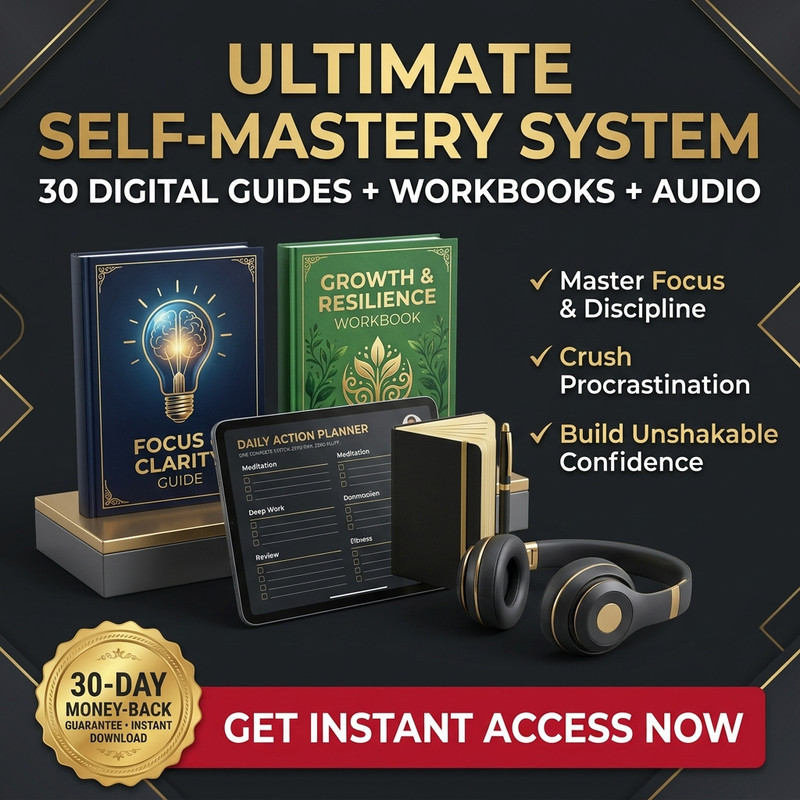
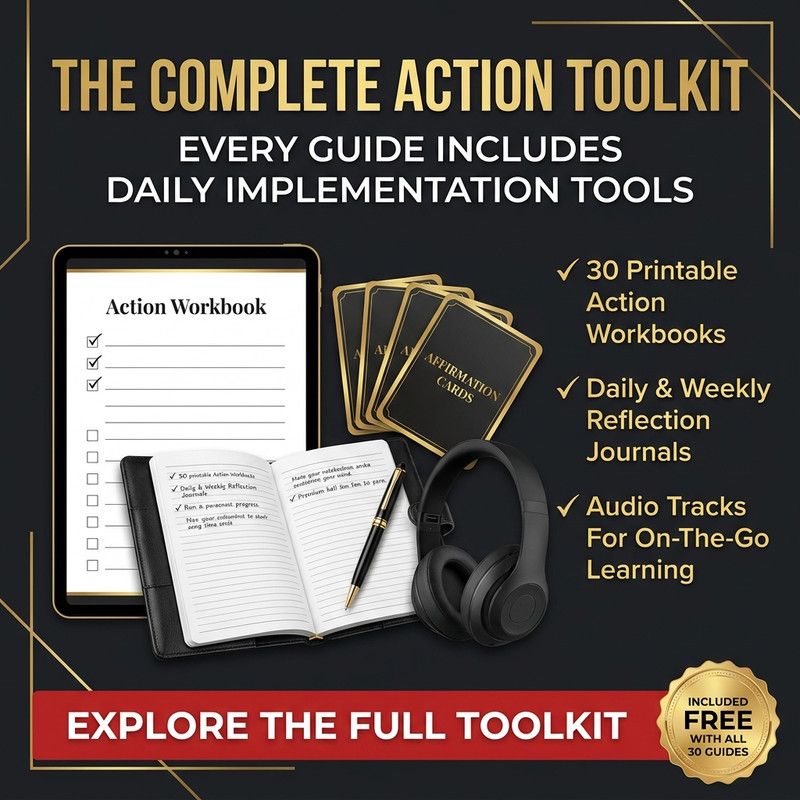
Stop guessing and start building. You've read the theory, but now it's time to implement. This all‑in‑one kit includes everything you need to turn these principles into permanent habits.
- Worksheets & Trackers: Printable templates to map out your daily willpower peaks and habit stacks.
- Summary Video: High-quality video guide detailing advanced focus management techniques.
- Audio File: High-quality audio for learning on-the-go.
Price: $15.00 $5.00 (70% off for quiz‑takers!)
This special price is our way of rewarding you for taking the time to understand yourself better. Don't let this knowledge go to waste.
💬 We'd Love to Hear Your Thoughts!
Which of these biology-backed study habits are you going to try first? Have you ever experienced ego depletion during a long study session, and how did you handle it? Let us know your thoughts, challenges, or success stories in the comments below!
📋 Summary
Building good habits for students is not about working harder; it's about working smarter by aligning your routine with your brain's natural biology. By understanding the battle between your prefrontal cortex and lizard brain, implementing the 3-Bucket System to protect your digital wellbeing, scheduling tasks around ego depletion, and using habit stacking, you can automate your academic success in 2026.