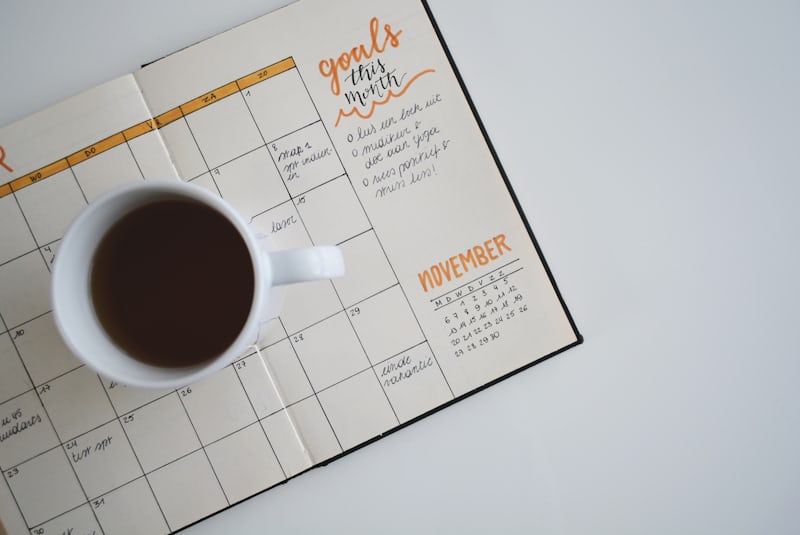
The concept of habit stacking has transformed the way behavioral science approaches behavior change. First articulated by BJ Fogg in his work on tiny habits, and later popularized by James Clear in Atomic Habits, habit stacking is a specific form of implementation intention. The formula is simple: take a new behavior you want to adopt and anchor it to an existing, automatic behavior that already occurs reliably in your morning routine or daily schedule. For example: "After I pour my morning coffee, I will write down my top three priorities for the day." The existing habit serves as a trigger; the new behavior rides on its coattails. Research shows that this approach dramatically increases the likelihood of a new habit sticking, because it removes the cognitive burden of deciding when to act.
🧠 Quick Quiz: Is Your Habit Stacking Strategy Built to Last?
Before diving into the guide, take this 3-question interactive test to evaluate your current understanding of habit formation and see if you need a highly personalized AI routine planner to optimize your daily routine!

Question 1: What is the core formula of a successful habit stack?

Yet for all its power, habit stacking has a hidden vulnerability: the stack design must match the individual’s unique daily rhythm. A stack that works brilliantly for an early-rising freelancer may be entirely useless for a shift worker with an unpredictable schedule. Generic templates found online often fail because they assume a stable, nine-to-five structure and ignore the subtle realities of energy fluctuations, family demands, and personal chronotype. This is where large language models like ChatGPT can serve as a uniquely flexible design partner. Using ChatGPT for habits is not about letting AI dictate your life; it’s about using its ability to process language, ask clarifying questions, and generate tailored options to co-create a personalized routine that fits the granular texture of your actual day.
In this article, we’ll explore how to use ChatGPT as a tool to design a robust habit stacking system from scratch—no technical expertise required. The approach is grounded in peer-reviewed habit science, and every strategy can be executed using the standard conversational interface of any large language model. No specific app or commercial product is promoted. The goal is to equip you with a method that combines the proven effectiveness of habit stacking with the adaptive, personalizing capabilities of AI productivity techniques.
📋 Table of Contents
- 1. The Science of Habit Stacking: Why It Works
- 2. Why Generic Stack Templates Fail
- 3. Traditional vs. AI-Powered Habit Stacking
- 4. How ChatGPT Functions as a Habit Design Partner
- 5. Step-by-Step Process for Designing Your Stack
- 6. How AI Can Help You Master Habit Stacking
- 7. Advanced Prompting Strategies for Better Results
- 8. Limitations, Risks, and Human Judgment
- 9. Frequently Asked Questions (FAQ)
The Science of Habit Stacking: Why It Works and What It Needs
To design an effective stack, it’s important to understand precisely why the method works. Cognitive psychologists describe two systems in the brain: the deliberative, effortful System 2, and the automatic, intuitive System 1. Forming a new habit involves transferring a behavior from System 2 to System 1, so it can be executed without conscious effort. The key to this transfer is consistency in the presence of the same contextual cue.
Traditional habit stacking leverages an existing System 1 behavior as that cue. When you anchor a new behavior to something you already do automatically—brushing your teeth, making tea, closing your laptop at the end of the workday—you bypass the need to create a brand-new cue from scratch. The brain’s neural circuitry for the anchor behavior is already well-established, and the new behavior gets linked to that circuit through repeated pairing. This is the mechanism of associative learning that makes habit stacking so efficient. According to a landmark study published in the European Journal of Social Psychology, forming an automatic habit can take anywhere from 18 to 254 days, depending on the complexity of the behavior and the consistency of the cue.
However, for the link to form, the anchor must be reliable and precise. If your "morning coffee" habit sometimes happens at 7 a.m., sometimes at 10 a.m., and sometimes not at all, it’s a poor anchor. The anchor must also occur at a time when you have the physical and mental capacity to perform the new behavior. Stacking a 20-minute exercise routine onto a habit that occurs when you are already exhausted and hungry is unlikely to succeed. A well-designed stack respects the interplay of timing, energy, and context. AI habit stacking can help identify these interplays by analyzing the detailed information you provide about your day.
Why Generic Stack Templates Fail
A quick internet search yields thousands of habit stacking examples. The typical list suggests sequences like: "After I wake up, I will meditate. After I meditate, I will journal. After I journal, I will exercise." For a specific, highly disciplined person with a perfectly consistent morning, this might work. For everyone else, it often crumbles within days.

The reasons are straightforward. First, generic stacks ignore personalization. One person wakes up energized; another wakes up groggy and needs thirty minutes of quiet before any activity is viable. One person has a commute; another works from home with young children. The sequence that makes sense for the first person may be absurd for the second.
Second, generic stacks underestimate the friction of transitioning between habits. A stack that strings together five new behaviors in a row is essentially a chain of unestablished habits, each of which requires willpower. The failure of a single link breaks the entire chain, leading to guilt and abandonment. A far better approach is to start with a stack of one—a single anchor and a single new tiny habit—and expand only after that link is automatic.
Third, generic stacks rarely account for different types of days. A weekday routine and a weekend routine are often so different that a single stack cannot serve both. Travel, illness, holidays, and high-stress periods all disrupt the best-laid plans. A stack that cannot bend will break. ChatGPT prompts can be used to generate adaptive versions of a stack for different contexts, an approach that is difficult to replicate with static templates.
Traditional vs. AI-Powered Habit Stacking
To better understand how modern technology elevates behavioral science, let's compare the traditional approach to habit stacking with an AI-driven methodology.
| Feature | Traditional Habit Stacking | AI-Powered Habit Stacking |
|---|---|---|
| Source of Templates | Static online lists or generic self-help books. | Dynamic, custom-generated sequences based on your actual schedule. |
| Adaptability | Rigid. If you miss one step, the entire chain breaks. | Highly flexible. Generates "emergency" and weekend variations. |
| Energy Alignment | Ignored. Assumes equal willpower throughout the day. | Integrated. Maps high-cognitive habits to peak energy windows. |
| Troubleshooting | Requires manual trial-and-error and self-coaching. | Interactive. AI analyzes failure points and suggests adjustments. |
How ChatGPT Functions as a Habit Design Partner
Large language models like ChatGPT operate by processing the text you provide and generating contextually relevant, coherent responses. In the context of habit design, this means you can describe your specific daily schedule, energy patterns, goals, constraints, and preferences in natural language, and the model can synthesize that information into tailored habit stacking plans. It can also simulate conversations that help you think through obstacles and alternatives, much like a professional productivity coach.

The value lies not in the AI’s intrinsic wisdom—it has none—but in its capacity to hold a complex set of variables in working memory and apply well-known frameworks (like habit stacking, implementation intentions, and behavior change principles) to your unique configuration. It can generate multiple options, adapt them based on your feedback, and help you create contingency plans for high-risk situations.
Importantly, using ChatGPT in this way is a deliberate, structured process. It is not about asking a single vague question and blindly following the output. The best results come from a multi-step dialogue in which you provide detailed context, evaluate the AI’s suggestions critically, and iterate until the stack feels realistic and aligned with your life. The AI is a tool for exploration, not an oracle.
🌟 Real-Life Inspirations & Success Stories
BJ Fogg's Toilet-to-Pushups Stack: BJ Fogg, the founder of the Behavior Design Lab at Stanford University and author of Tiny Habits, famously used habit stacking to build a daily strength routine. He anchored a new habit—doing two push-ups—to an unavoidable, automatic daily trigger: flushing the toilet. By starting incredibly small and using a reliable anchor, he scaled this tiny habit over time into a consistent daily routine of over 50 push-ups without ever needing to schedule a formal workout block.
A Step-by-Step Process for Designing Your Personal Habit Stack with ChatGPT
The following process uses ChatGPT as a conversational design environment. The same approach works with any competent large language model. The key is to be specific, provide rich context, and treat the interaction as an iterative collaboration.
- Step 1: Audit Your Current Daily Routine. Before engaging the AI, spend a few days observing your existing behaviors without judgment. Note the times and sequences of activities that are already automatic. Common anchors include waking up, using the bathroom, making a hot drink, feeding a pet, starting the car, opening a work application, eating a meal, closing a laptop, and getting into bed. The goal is to generate a list of stable, reliable moments that occur every day regardless of mood or motivation.
- Step 2: Define Your Target Habits and Their Smallest Viable Versions. List the new habits you wish to adopt, then scale each one down to its tiniest, least intimidating form. A desire to "exercise daily" becomes "do one push-up." "Read more" becomes "read one paragraph." "Practice mindfulness" becomes "take three conscious breaths." This approach is fundamental to tiny habits and ensures that even on low-energy days, the behavior can be performed. The stack should initially be built around these micro-behaviors, with scaling occurring later.
- Step 3: Provide Detailed Context to ChatGPT. Now, open a conversation with ChatGPT and provide a comprehensive prompt. The prompt should include: a description of your typical weekday schedule with approximate times; your energy highs and lows throughout the day; your existing anchor habits; your target tiny habits; any relevant constraints (e.g., children, commute, noise); and your preferences for how the stack should feel—ambitious and dense, or gentle and spacious.
- Step 4: Ask ChatGPT to Generate Anchor-New Behavior Pairs. With the context provided, the model can propose specific pairings. It might suggest: "After you pour your morning coffee (7:30 a.m.), do one minute of deep breathing as your intention-setting practice." "After you close your laptop for lunch (12:30 p.m.), do a 30-second standing stretch." "After you brush your teeth at night (10:00 p.m.), recall one thing that went well today." Ask the model to generate multiple options for each anchor so you can choose the ones that feel most natural.
- Step 5: Request Implementation Intention Statements. Ask ChatGPT to formalize the chosen pairs into precise implementation intention statements following the format: "When [existing habit], I will [new tiny habit]." For example: "When I finish my morning coffee, I will take one minute to breathe deeply." The specificity of "when I finish" rather than "after coffee" matters, because it reduces ambiguity. Have the model generate these as a written list you can print and place in a visible location.
- Step 6: Simulate and Stress-Test the Stack. Use ChatGPT to role-play potential disruptions. Ask: "What if I sleep through my alarm and miss my morning routine entirely? How should I adjust?" The model might respond with a simplified "emergency stack" for rushed mornings: a single 30-second breath exercise triggered by sitting down at your desk. Similarly, ask about variations for weekends, travel, or illness. This process builds resilience into the stack, preventing the all-or-nothing thinking that often derails new habits.
- Step 7: Iterate Based on Real-World Feedback. The first version of any stack is a hypothesis, not a permanent structure. Implement the stack for one week, then return to ChatGPT with observations. Describe what worked, what felt awkward, and where the chain broke. The model can then suggest adjustments: moving a habit to a different anchor, shrinking the behavior further, or temporarily removing a link that created too much friction. This dialogue-based iteration mimics the role of a coach, but it is driven entirely by your self-observation and the AI’s analytical suggestions.
How AI Can Help You Master Habit Stacking
Integrating AI into your self-development workflow goes beyond simple scheduling. By utilizing advanced prompts, you can transform ChatGPT, Claude, or Gemini into an active behavioral design partner. AI can analyze your cognitive load, map your daily energy fluctuations, and construct highly personalized routines that adapt dynamically to your life.
To implement this in real life, follow this step-by-step workflow: first, copy the advanced prompt template below; second, paste it into your AI tool of choice; third, fill in the bracketed details with your actual daily routine; and finally, refine the output with the AI until you have a frictionless plan.
Act as an expert behavioral psychologist and productivity coach specializing in BJ Fogg's Tiny Habits and James Clear's Atomic Habits. I want to design a highly personalized habit stacking system that fits my unique daily routine.

Here is my context:
- My current daily schedule: [Insert your rough schedule, e.g., wake up at 7 AM, work 9-5, sleep at 11 PM]
- My peak energy times: [e.g., high energy 9 AM - 11 AM, low energy 2 PM - 4 PM]
- My reliable daily anchor habits: [e.g., brewing morning coffee, closing work laptop, brushing teeth]
- The new habits I want to build: [e.g., daily reading, stretching, planning the next day]
- My main constraints: [e.g., busy parent, unpredictable meeting times]

Please:
1. Break down my target habits into their smallest, "tiny habit" versions.
2. Pair each tiny habit with the most logical anchor based on my energy levels and schedule.
3. Write out the exact "implementation intention" statements for each stack.
4. Create an "Emergency Stack" for high-stress or low-energy days.
Advanced Prompting Strategies for Better Results
The quality of the output from ChatGPT is highly dependent on the quality of the input. A few advanced strategies can significantly improve the usefulness of the AI’s suggestions.
- Use Constraint-Rich Prompts: Instead of asking "Give me a habit stack," specify constraints: "Suggest a stack that takes no more than 5 minutes total, uses only three anchors, and must work on both weekdays and weekends." Constraints force the model to prioritize and produce more realistic plans.
- Ask for Rationale: After receiving a suggestion, ask: "Why did you pair these specific habits together? What principle guided your selection?" This helps surface the logic and allows you to judge whether it aligns with your understanding of your own life.
- Request Multiple Variants: Ask for three different stack configurations: one that is minimal (just two habits), one that is moderate (four habits), and one that is ambitious (six habits). This provides a range of options, and you can start with the minimal stack, adding more as automaticity develops.
- Incorporate Energy Mapping: Provide ChatGPT with a simple energy map of your day (e.g., "Energy is 8/10 at 9 a.m., 6/10 at 1 p.m., 4/10 at 3 p.m., 7/10 at 6 p.m.") and ask it to match habits to energy levels. High-cognitive-demand habits should be anchored to high-energy periods; automatic or physically active habits can be placed in lower-energy windows. This AI routine planner logic ensures the stack respects your biological rhythms.
- Generate If-Then Contingency Plans: Use ChatGPT to create explicit if-then plans for the most common obstacles: "If I miss my morning stack because of an early meeting, then I will do a two-minute version after lunch." Research on implementation intentions shows that these specific contingency plans dramatically increase the likelihood of staying on track after a disruption.

📚 Recommended Readings & Lit List
To dive deeper into this subject, here are some critically acclaimed and highly recommended books that offer profound insights on this specific topic:
- "Atomic Habits" by James Clear: A comprehensive, practical guide on how to build good habits and break bad ones, popularizing the concept of habit stacking and implementation intentions.
- "Tiny Habits" by BJ Fogg: The foundational text on behavioral design, explaining how starting with micro-behaviors and celebrating small wins leads to long-term behavior change.
- "The Power of Habit" by Charles Duhigg: An engaging exploration of the science behind habit loops (cue, routine, reward) in individuals, organizations, and societies.
Limitations, Risks, and the Importance of Human Judgment
While ChatGPT is a powerful design aid, it has important limitations that must be respected.
The model does not know you. It can only work with the information you provide. If you omit crucial details—such as an unspoken anxiety that makes certain environments unsuitable for habit performance—the stack may fail for reasons the AI could not anticipate. You remain the expert on your own life.
The model can hallucinate or generate plausible-sounding but scientifically unsupported advice. It might confidently assert that it takes exactly 21 days to form a habit, when actual scientific research shows a much wider, highly variable range. Always verify any factual claims against reputable sources.
🎬 Visual Summary Slides
Swipe/scroll horizontally to view the key visual takeaways and lessons from this guide:


There is also a risk of over-optimization. It is possible to spend so much time designing and tweaking the stack with ChatGPT that the actual execution becomes secondary—a form of productivity theater. The goal is to spend a focused session designing the stack, then move quickly to doing it, returning to the design conversation only for periodic refinement.
Finally, privacy is a consideration. When sharing detailed daily routines with any AI platform, it is wise to be mindful of the platform's data usage policies. Avoid sharing sensitive personal identifiers that could link the information back to you if that is a concern.
Frequently Asked Questions (FAQ)
Q: How many habits should I stack at once?
A: When starting out, stack exactly one new habit onto one existing anchor. Only after that single connection becomes completely automatic should you consider adding another habit to the sequence.
Q: What should I do if my anchor habit is inconsistent?
A: Find a different anchor. A good anchor is an action you perform every single day without fail, such as waking up, brushing your teeth, or closing your laptop. If your anchor is variable, your new habit will be too.
Q: Can I use ChatGPT to design weekend routines?
A: Yes! In fact, this is where AI shines. You can prompt ChatGPT to design a completely separate "Weekend Stack" that aligns with your more relaxed schedule while keeping your core habits alive.
Q: Is it safe to share my daily schedule with ChatGPT?
A: Generally yes, but to protect your privacy, avoid sharing highly specific personal details like your home address, company name, or exact real-time locations.
💬 We'd Love to Hear Your Thoughts!
What is the single biggest challenge you face when trying to make new habits stick? Have you ever tried anchoring a new routine to an existing daily trigger? Let us know your experiences, thoughts, or questions in the comments section below!
Summary
Habit stacking is one of the most empirically supported strategies for sustainable behavior change. Its strength lies in its simplicity: you build new behaviors onto the robust architecture of existing ones. But simplicity does not mean uniformity. A stack that fits one person’s day may be entirely unsuitable for another’s. Large language models like ChatGPT fill that gap by allowing you to engage in a structured, iterative, and deeply personalized design conversation that translates the universal principles of habit science into a concrete sequence of actions aligned with your unique daily rhythm.